Tuesday, March 26, 2019

The list of great books You must have to read it

1.Think and grow rich 
Think & Grow Rich by Napoleon Hill. "When you begin to think and grow rich, you will observe that riches begin with a state of mind, with definiteness of purpose, with little or no hard work. ... Think & Grow Rich is probably THE #1 most famous success book of all time


2. 7 habits of highly effective people 
 That's where the seven habits of highly effective people come in: Habits 1, 2, and 3 are focused on self-mastery and moving from dependence to independence. Habits 4, 5, and 6 are focused on developing teamwork, collaboration, and communication skills, and moving from independence to interdependence

l achieve it.

3. The One Thing by Gary Keller

Do you know who you are? What makes you successful? Those are the questions posed by The One Thing. If you can't identify that one thing that makes you unique or valuable, this is the book you need. This book taught me how to analyze myself; when I finally broke myself down, and discovered that one thing that makes me 


4.Manage Your Day-to-Day by Jocelyn K. Glei

"Stop doing busywork. Start doing your best work" is the theme of this book. Many times I have met inspiring entrepreneurs, and creative geniuses, who are kept from amazing success because of their terrible schedule or lack of routine. I was guilty of the same thing. No amount of talent or skill was able to help me until I created a manageable schedule.
I used to always run to fix the latest "fire" in the office, and I would get nothing of value accomplished all day. When I come in with a ready schedule, not only do I generate more value, but I also get more done, and things end up resolving themselves.
5.The power of your subconcious mind 
: The Power of Your Subconscious Mind was written by a leading expert on the subject, Joseph Murphy. From my perspective, this book equates your subconscious mind with God, which is likely a different and challenging paradigm for some to accept.

Samsung Galaxy M20


Monday, March 25, 2019

New tech facts

1.The english name for red panda is FIREFOX so the browser got its name
 

2.very first the apple logo was featured sir newton sitting beneath the tree and the apple is about to hit his head  
 

3.On average work day typist fingers travell about 12.7 miles

 
4. The dentist named Alfred Southwick invented electric wheelchair 

 
5.In 1999 the paypal was considered as worst buissness idea

NANOTECH FACTS


  • 🖌A nanometre (nm) is a billionth of a metre, or a millionth of a millimetre.
  • 🖌1 nanometre is about 8 times the radius of an atom and 100 times smaller than a bacterial cell. At this scale matter reacts differently, for example, a material's melting point may change or it may become more reactive.
  • 🖌A human hair is 80,000 nm in diameter.
  • Nanoscience works on a scale 1000 times smaller than anything that can be seen with an optical microscope.
  • 🖌We are already surrounded by billions of nano-particles, such as wind borne sea salt and chemicals generated by oceanic plankton.
  • 🖌A new form of carbon with a cylindrical nanostructure - the nanotube - was discovered in 1991.
  • 🖌Nanotubes have novel properties including extraordinary strength and unique electrical properties.
  • 🖌These mechanical and electrical properties make nanotubes potentially useful in many applications from electronics to everyday items like clothes and sports gear
  • 🖌The discovery of another nanoscale carbon form, C60, called the buckyball, brought the 1996 Nobel Prize in Chemistry to Robert Curl, Sir Harold Kroto, and Richard Smalley. It started an avalanche of research into other nanoscale materials.
  • 🖌Nanotechnology is already applied commercially in products ranging from mobile phones, computer discs, tennis rackets and golf clubs to sunscreens and cosmetics.
  • 🖌L'Oreal have developed nanosize vesicles called nanosomes. They are used to transport active ingredients such as pure Vitamin E through the skin
  • 🖌Nanoscience is not just one science. It is a platform that includes biology, chemistry, physics, materials science and engineering.
  • 🖌Nanotechnology was first introduced in 1959 by Nobel Prize-winning physicist Richard Feynman. He proposed using normal-sized robots to construct smaller replicas of themselves and then using the new set to manufacture an even smaller set, and so on, until the molecular scale is reached.
  • 🖌It is widely accepted that nanotechnology could revolutionize our lives over the next 20 years. Particular fields include disease identification and cure, drug discovery and delivery, environmentally friendly renewable energy sources, and ultra-high speed mobile telecommunications.
  • 🖌Nanotechnology is multidisciplinary. Materials scientists, mechanical and electronic engineers and medical researchers are teaming up with biologists, physicists and chemists. Research at the nanoscale is unified by the need to pool knowledge on tools and techniques and to share expertise.
  • 🖌Nanotechnology is already having an impact on novel foods, medical devices, chemical coatings, personal health testing kits, sensors for security systems, water purification units for manned space craft, displays for hand-held computer games, and high-resolution cinema screens.
  • 🖌Self-assembly at the scale of molecules is commonly employed by nature within every living cell but it is very rarely used in engineering procedures.
  • 🖌Nanotechnology enables new developments in electronics, medicine, healthcare and in many consumer products.
  • 🖌Nanotechnology will change our lives in many ways. It is important that it is developed responsibly and that it also addresses the concerns of citizens.
  • 🖌At the Nano level the differences between scientific disciplines fade. Nanotechnology needs new approaches that cross the tradition boundaries between physics, chemistry, biology and engineering.

    The word nano is from the Greek word 'Nanos' meaning Dwarf. It is a prefix used to describe "one billionth" of something

Intresting Animal Facts

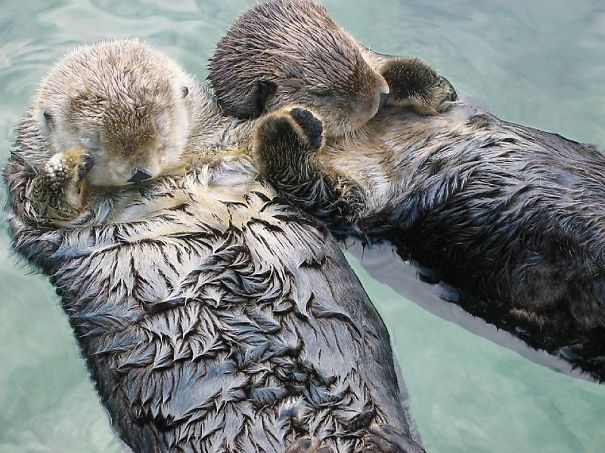
1. Sea otters hold hands when they sleep to keep from drifting apart.

Image credits: commons.wikimedia.org

2. Squirrels plant thousands of new trees each year by merely forgetting where they put their acorns.

Image credits: Irene Mei

3. When playing with female puppies, male puppies will often let them win, even if they have a physical advantage.

Image credits: Brian Whipple

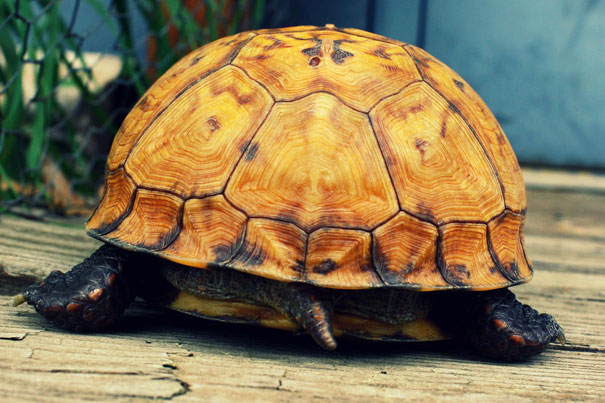
4. Turtles can breathe through their butts.

Image credits: TaraDSturm

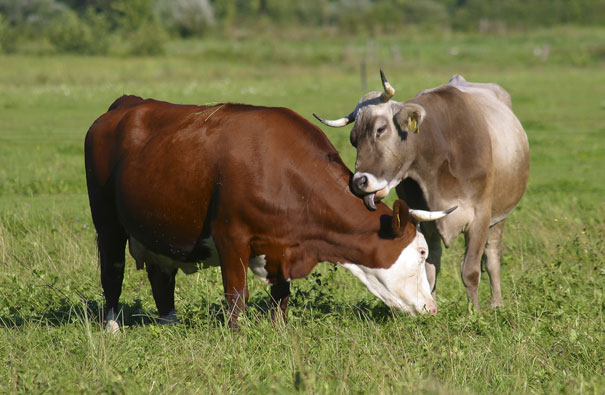
5. Cows have best friends.

Image credits: mare

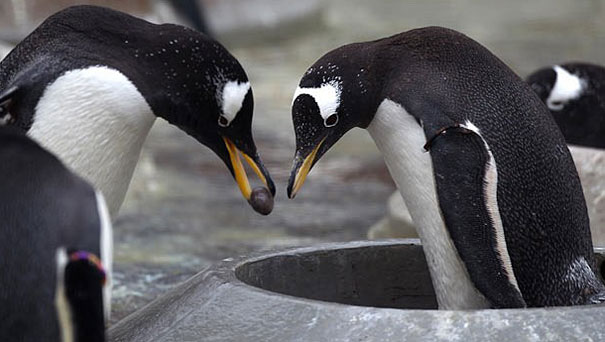
6. Gentoo penguins propose to their lifemates with a pebble.

Image credits: telegraph.co.uk

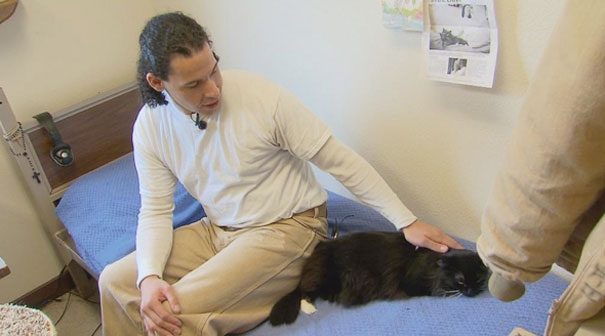
7. A prison in Washington pairs up “death row” shelter cats with select inmates as part of a rehabilitation program. It seems to be a pretty incredible thing for both the inmates and the cats.

Princess Natalie relaxes with Joseph Contreras, one of her caretakers. (Image credits: catster.com)

8. Macaques in Japan use coins to buy vending machine snacks.

Image credits: o2worldnews.com

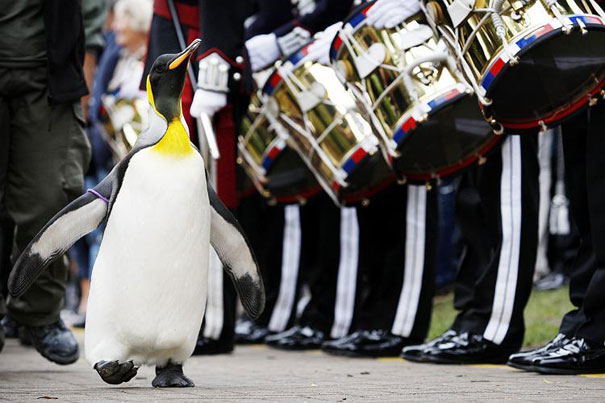
9. Norway knighted a penguin.

Image credits: thatpanic.com

10. In China, killing a Panda is punishable by death.

Image credits: Cute Baby Animals

11. Rats laugh when tickled.


12. Spiders can’t fly.

13. Sweden has a rabbit show-jumping competition called Kaninhoppning.

Image credits: thowra

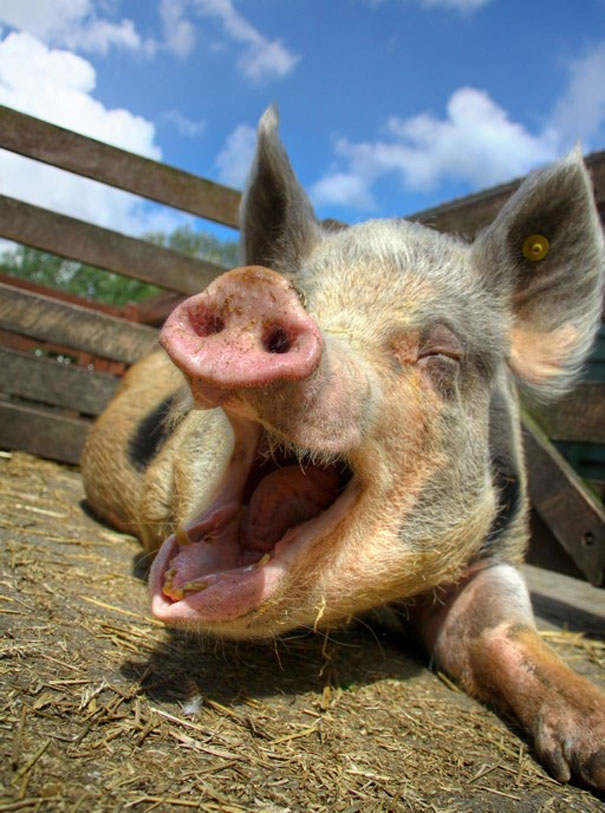
14. Pigs’ orgasms last for 30 minutes.

Image credits: Source Media

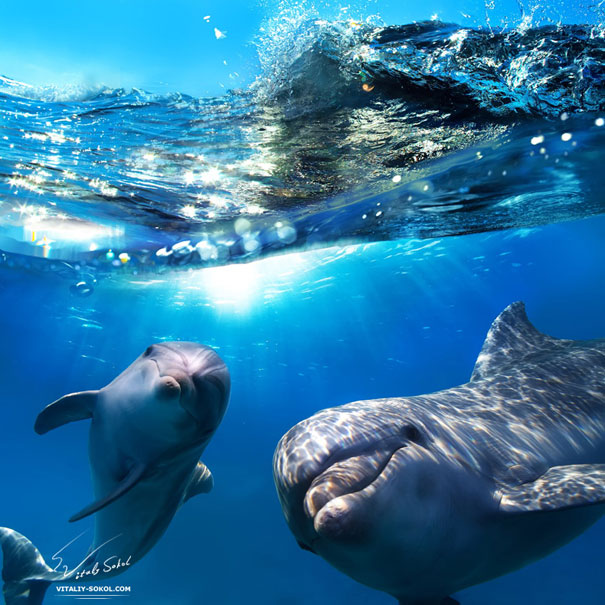
15. Dolphins have names for each other.

Image credits: Vitaliy Sokol

16. Puffins mate for life. They make their homes on cliff sides and set aside room for their toilet.

Image credits: fourteenfoottiger

17. A study measuring the effects of music found that cows produce more milk when listening to soothing music. They produce the most when listening to R.E.M’s “Everybody Hurts.”

Image credits: cbc.ca

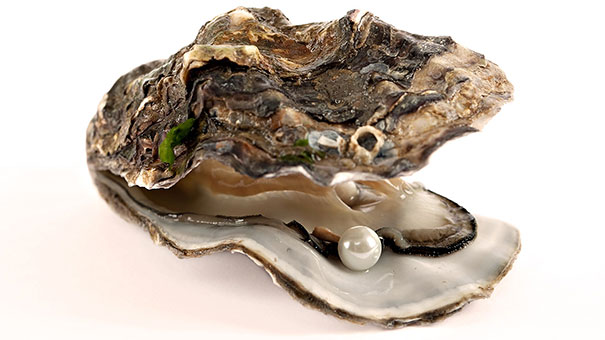
18. Oysters can change gender depending on which is best for mating.

Image credits: wallpaper4me.com

19. Japanese Macaques make snowballs for fun.

Image credits: Lee Fisher

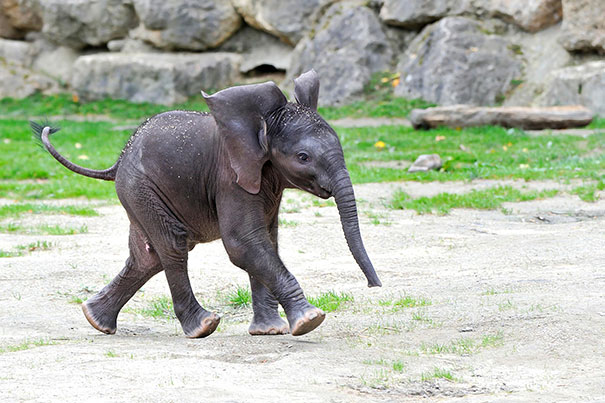
20. The closest relatives to the elephant shrew are actually elephants, not shrews.

Image credits: Klaus Wiese
Image credits: Josef Gelernter

21. A cat version of the corgi exits: the munchkin cat.

Image credits: Jimmy Leo

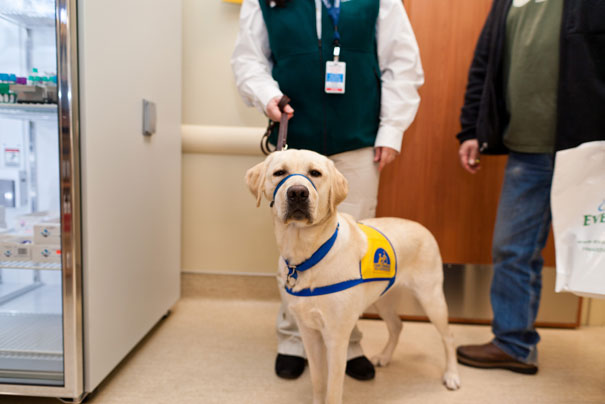
22. There is a program that makes prison inmates responsible for training and raising seeing-eye dogs. Many reported that they felt like they were making amends for their past actions by working with the puppies.

Image credits: absencesix

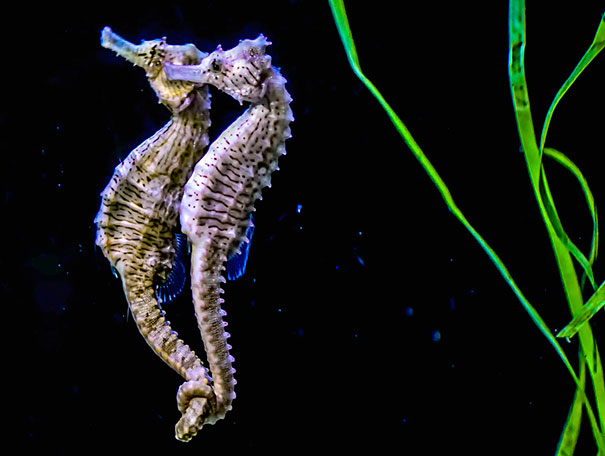
23. Seahorses mate for life, and when they travel, they hold each others’ tails.

Image credits: Georgina Gomez

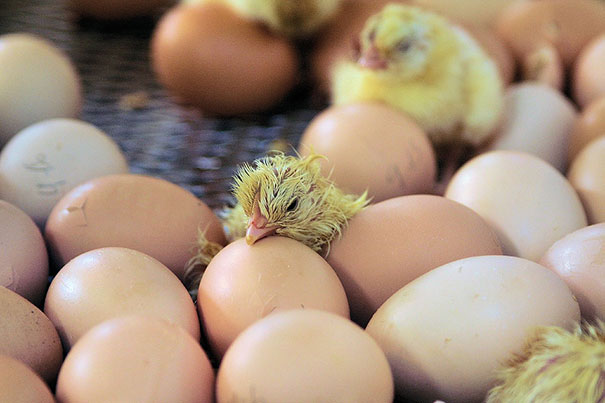
24. Before chicks hatch, they can communicate with each other and their mother through a system of sounds.

Image credits: caryn74

25. Dogs’ nose prints are as unique as human fingerprints and can be used to identify them.

Sunday, March 24, 2019

Facts about Human body

  1. The only part of the body that has no blood supply is the cornea of the eye. It receives oxygen directly from the air.
  2. The human brain has a memory capacity which is the equivalent of more than four terabytes on a hard drive.
  3. A newborn child can breathe and swallow at the same time for up to seven months.
  4. Your skull is made up of 29 different bones.
  5. Nerve impulses sent from the brain move at a speed of 274 km/h.
  6. A single human brain generates more electrical impulses in a day than all the telephones of the world combined.
  7. The average human body contains enough sulphur to kill all the fleas on the average dog, enough carbon to make 900 pencils, enough potassium to fire a toy cannon, enough fat to make seven bars of soap and enough water to fill a 50-litre barrel.
  8. The human heart pumps 182 million litres of blood during the average lifetime.
  9. 50,000 cells in your body died and were replaced by new ones while you were reading this sentence.
  10. The human embryo acquires fingerprints within three months of conception.
  11. Women’s hearts beat faster than men’s.
  12. A man named Charles Osborne hiccupped for a total of 68 years.
  13. Right-handed people live, on average, nine years longer than left-handed people.
  14. About two thirds of people tilt their head to the right when kissing.
  15. The average person forgets 90% of their dreams.
  16. The total length of all the blood vessels in the human body is about 100,000 km.
  17. On average, a person’s respiration rate is one third higher in spring than in autumn.
  18. By the end of a person’s life, they can recall, on average, around 150 trillion pieces of information.
  19. We lose 80% of our body heat from the head.
  20. When you blush, your stomach also turns red.
  21. A feeling of thirst occurs when water loss is equal to 1% of your body weight. The loss of more than 5% can cause fainting, and more than 10% causes death from dehydration.
  22. At least 700 enzymes are active in the human body.
  23. Human beings are the only living things which sleep on their backs.
  24. The average four-year-old child asks 450 questions a day.
  25. Not only human beings, but also koalas have unique finger prints.
  26. Only 1% of the bacteria can result in the human body becoming ill.
  27. Everyone alive on Earth could comfortably be placed into a cube with sides 1000 meters long.
  28. The scientific name for the belly button is the umbilicus.
  29. Teeth are the only part of the human body which cannot heal themselves.
  30. On average, a person needs seven minutes to fall asleep.
  31. Right-handed people chew most of their food on the right side of their mouth, whereas left-handed people do so on the left.
  32. Only 7% of people are left-handed.
  33. The fragrance of apples and bananas can help a person to lose weight.
  34. If allowed to grow for their whole lifetime, the length of someone’s hair would be about 725 kilometres.
  35. Out of all the people who can move their ears, only one third of them are able to move just one ear.
  36. During their lifetime, a person will on average accidentally swallow eight small spiders.
  37. The total weight of the bacteria in the human body is 2 kg.
  38. 99% of the calcium contained in the human body is in one’s teeth.
  39. Human lips are hundreds of times more sensitive than the tips of a person’s fingers.
  40. A kiss increases a person’s pulse to 100 beats per minute or more.
  41. The total strength of masticatory muscles on one side of your jaw is equal to 195 kilograms.
  42. A person passes on 278 different types of bacteria to another person when they kiss them. Fortunately, 95% of them are not harmful.
  43. Parthenophobia is a fear of virgins.
  44. If you collected all the iron contained in the human body, you would get just a small cog, big enough only for use in your watch.
  45. There are more than 100 different viruses which cause a cold.
  46. If someone kisses another person for a certain amount of time, this is much more effective in terms of hygiene than using chewing gum, as it normalises the level of acidity in your oral cavities.
  47. You can lose 150 calories per hour if you hit your head against the wall.
  48. Human beings are the only animals which can draw straight lines.
  49. Human skin is completely replaced about 1,000 times during a person’s lifetime.
  50. A person who smokes a pack of cigarettes a day is doing the equivalent of drinking half a cup of tar a year.
  51. Women blink about two times less often than men.
  52. The structure of the human body contains only four minerals: apatite, aragonite, calcite, and crystobalite.
  53. A passionate kiss causes the same chemical reactions in the brain that skydiving and firing a gun do.
  54. Men are officially classified as dwarves if their height is below 1.3 m, whereas for women the measure is 1.2 m.
  55. Fingernails grow about four times faster than your toenails.
  56. People with blue eyes are more sensitive to pain than others.
  57. Nerve impulses in the human body move at about 90 m/s.
  58. 100,000 chemical reactions occur in the human brain every second.
  59. Everyone has dimples on their lower back, but on some people they are more pronounced than on others. They appear where the pelvis joins with the sacrum, so their appearance makes sense.
  60. If one identical twins lacks a certain tooth, the other twin will not have that tooth either.
  61. The surface area of the human lungs is approximately equal to the area of a tennis court.
  62. During a person’s lifetime, they spend about 2 weeks kissing.
  63. The facial hair of a blonde-haired man grows faster than that of a man with dark hair.
  64. Leukocytes in the human body live for two to four days, and erythrocytes for three to four months.
  65. The strongest muscle in the human body is the tongue.
  66. The human heart is approximately equal in size to that of a person’s fist. An adult’s heart weights 220-260 grams.
  67. At birth, there are 14 billion cells in the human brain. This number does not increase throughout a person’s lifetime. After 25 years, the number of cells falls by 100,000 every day. About 70 cells die in the minute it takes you to read a page in a book. After 40 years, the decline of the brain accelerates sharply, and after 50 years neurons (that is, nerve cells) shrink and the brain gets smaller.
  68. At birth, a child’s body is made up of around 300 bones. But an adult has just 206.
  69. During a person’s lifetime, the small intestine is about 2.5 meters. After they die, the muscles in the walls of their intestine relax, and it’s length increases to 6 meters.
  70. Your right lung can take in more air than your left.
  71. An adult person performs around 23,000 inhalations and exhalations a day.
  72. The smallest cells in a man’s body are sperm cells.
  73. There are about 40,000 bacteria in the human mouth.
  74. Each of us has around 2,000 taste buds.
  75. The human eye can distinguish 10 million different colours.
  76. The chemical compound in the body which causes feelings of ecstasy (phenylethylamine) is also contained in chocolate.
  77. The human heart pumps blood at such pressure that it would be able to raise blood up to the fourth floor of a building.
  78. A person burns more calories when they are asleep than when they watch TV.
  79. Children grow faster in the spring.
  80. Every year more than 2 million left-handed people die because of mistakes they make when using machines designed for right-handed people.
  81. It turns out that one man in every three hundred is capable of satisfying themselves orally.
  82. A person uses 17 muscles when they smile, and 43 when they frown.
  83. By the age of 60 most people lose half of their taste buds.
  84. The rate at which a person’s hair grows doubles during an airplane flight.
  85. One percent of people can see infra-red light and 1% can see ultra violet radiation.
  86. If you were locked in a completely sealed room, you would not die due to a lack of air, but from carbon dioxide poisoning.
  87. Statistically, only one person out of two billion reaches the age of 116 years old.
  88. On average, a person says 4,800 words in 24 hours.
  89. The retinas inside the eye cover about 650 square mm and contain 137 million light-sensitive cells: 130 million are for black and white vision and 7 million are for helping you see in colour.
  90. Our eyes remain the same size as they were at birth, but our nose and ears never stop growing.
  91. In the morning, a person is about 8 millimetres taller than in the evening.
  92. The muscles which help your eyes to focus complete around 100,000 movements a day. In order to make your leg muscles do the same amount of movements, you would need to walk 80 kilometres.
  93. A cough amounts to an explosive charge of air which moves at speeds up to 60 miles per hour.
  94. According to German researchers, the risk of having heart attack is higher on Monday than on any other day of the week.
  95. Bones are about 5 times stronger than steel.
  96. It is impossible to sneeze with your eyes open.
  97. Ingrown toenails are hereditary.
  98. A person would die quicker from a total lack of sleep than from hunger. Death would occur after ten days without sleep, whereas from hunger it would take several weeks.
  99. The average life expectancy is 2,475,576,000 seconds. During this time we pronounce, on average, around 123,205,750 words and have sex 4,239 times.

being engineer facts

Engineers beware! You thought you knew everything about yourself, your colleagues and your job?  You surely have not heard the following 7...